
The San Bartolomé neighborhood, where the Casa Palacio La Casa Blanca Suites is located, together with the Santa Cruz and Santa María La Blanca neighborhoods, forms an area that was once reserved for the Jewish community of Seville, the second most important after that of Toledo. During the Reconquista in the mid-13th century, it was favored by the Christian King Ferdinand III the Saint as a place of residence and worship for the Jews living in the city of Seville at that time.
Just a short 3-minute walk from the Cathedral and its Giralda, the Royal Alcázar, the heart of the magical Santa Cruz neighborhood, and the main artery of the city, the majestic Avenida de la Constitución, which is the nerve center of the city, on one side, and the city’s shopping district, Calle Sierpes and La Campana, on the other.
Easy access to means of transportation that will take you to Santa Justa train station, the airport, or Plaza de Armas bus station, as well as the taxi service that can be accessed from the main entrance of our building.


Next to Casa Palacio La Casa Blanca Suites
Square
- ALFALFA SQUARE (distance 300 meters)
The Alfalfa square, 300 meters away, is one of the liveliest squares in 21st century Seville, where once stood the most important Roman forum of the city with temples, baths, and public buildings (in the nearby Mármoles street, gigantic Roman columns can be observed, remnants of those buildings).
It was a market where hunted game was sold, welcomed vegetable merchants, and later became known as the butcher shop of Seville, serving as the supply point for providers and butchers in the city.
Nowadays, it is an area frequented by both locals and foreigners who walk through the square in search of a quiet café to have breakfast or enjoy a wonderful tapa in any of its bars.


- SALVADOR SQUARE (distance 500 meters)
Plaza del Salvador has always been a privileged place within the city of Seville. It has housed Hispano-Roman Christian temples, Roman mansions, mosques, cemeteries, hospitals, Christian, Gothic, and Baroque churches, fruit and vegetable stalls, and all kinds of businesses that crowded around it. It was part of the Roman forum of the city, and there was a basilical structure, later converted into the first mosque of the city, Inb Addabas, from the Muslim period built in 830 A.D. and erected over Roman and Visigoth remains, in the same place that is now occupied by the Church of Salvador, a Mannerist work from the 17th century, which is the largest church in the city after the Cathedral.
Do you want to see the old orange yard and the minaret of that primitive mosque? In the adjoining Córdoba street, you will find the base of the minaret tower (about ten meters above ground level and another two meters below) and remains of arches and capitals from both Roman and Visigothic times in the orange patio of Salvador.


- CUESTA DEL ROSARIO AND PLAZA DE LA PESCADERÍA (400 meters away)
One of the most well-known and currently busy squares in the city, forming, along with the Alfalfa and Salvador squares, the ancient triangle chosen by the Romans to establish their commercial forum when they conquered Seville in 206 BC. Today it is frequented for housing various tapas bars, some outdoors, with different culinary specialties, and above all, for having an atmosphere that invites you to stay.
Since 2007, a steel sculpture dedicated to the writer Clara Campoamor has been located on one side of the square, addressing female oppression. At ground level, it brings it closer to the viewer; be sure to observe all the small details left by its author, Anna Jonsson, Swedish by birth, Sevillian by adoption.


- SAN FRANCISCO SQUARE (distance 600 meters)
The Plaza de San Francisco is one of the oldest and most emblematic spaces in the capital, and already in the 16th century, it was the heart of the city, serving as the main square. The main civil powers were located there, famous autos de Fe of the Holy Inquisition were held, various bullfighting and cane festivities took place, and just like today, it constituted one of the main locations in the well-known official route of the Holy Week and Corpus Christi processions.
In this square, several important buildings of the city can be found, some very representative and of utmost historical, cultural, and social interest, such as the City Hall, the Old Audience, the headquarters of the Bank of Spain, Casa Arcenegui, or the building Casa Laredo.


- SQUARE OF THE INCARNATION (distance 750 meters)
The Plaza de la Encarnación is the result of urban modifications carried out in the area from the 16th century to the present day. It is named after the disappeared Convent of the Incarnation, of the Order of Saint Augustine, whose building occupied part of the square. Important archaeological remains from the Roman and Andalusian periods of the city were discovered thanks to various archaeological excavations.
Here we find the Metropol Parasol, inaugurated in March 2011, designed by the German architect Jürgen Mayer, which consists of a structure of six umbrellas shaped like large mushrooms. Due to this mushroom-shaped structure, it is commonly known as Las Setas, and its design is inspired by the vaults of the Cathedral of Seville and the ficus trees in the nearby Plaza del Cristo de Burgos. The Metropol Parasol complex, due to its avant-garde design and tourist functions, has become another attraction in the historical center of Seville, even featuring in reports from prestigious international newspapers such as the New York Times or the Washington Post.
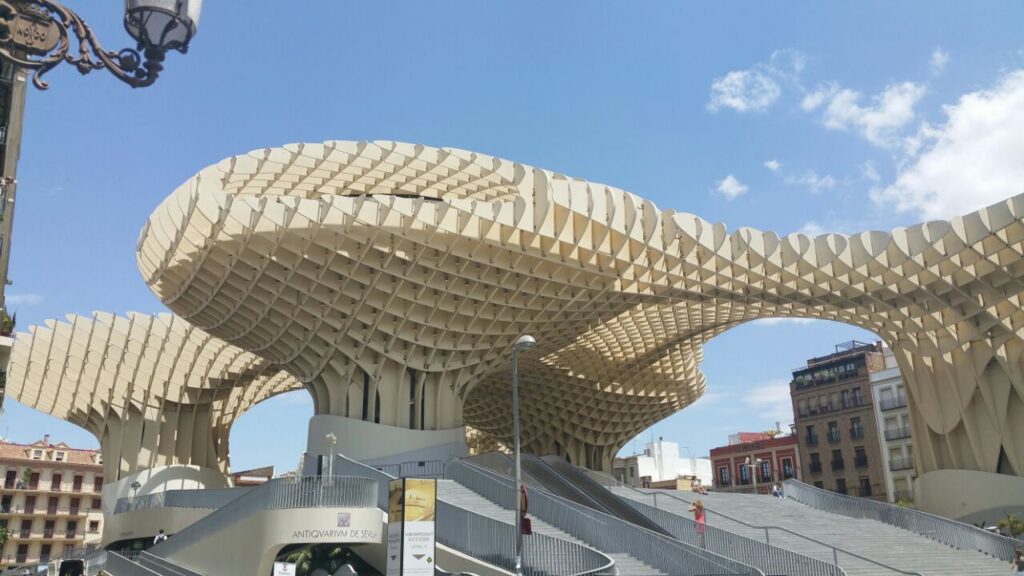
- SANTA CRUZ SQUARE (distance 600 meters)
At the epicenter of the Santa Cruz neighborhood, this small square tells us a thousand and one stories and legends of the city of Seville. It preserves one of the three mosques left by the Castilian king Ferdinand III during his reconquest of the city, converted into a synagogue for the prayer of the Jews, until their expulsion in the 15th century, when it became the Church of Santa Cruz. The famous painter Murillo was buried in this church, although legend has it that his remains disappeared in the 19th century with the arrival and destruction of the church by Napoleon’s troops. The story goes that the soul of the painter wanders through the square on full moon nights…
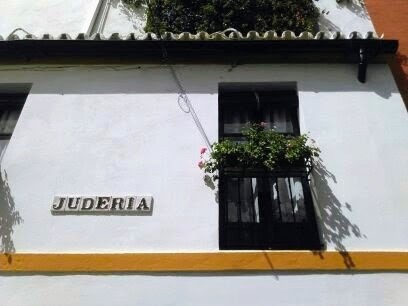
MOMUMENT AND CHURCH
- CHURCH OF SAN NICOLÁS DE BARI (LA CANDELARIA)
From practically all the apartments of Casa Palacio La Casa Blanca, you can contemplate the Church of San Nicolas de Bari, better known as La Candelaria, an 18th-century church, where there were Roman underground galleries, later it became a mosque until it was consecrated as a church in the 18th century. Its architecture denotes the transition from Baroque to Neoclassical, contrasting with the shell decoration of its altarpieces, come in and visit it! It is an exceptional temple with 5 naves, 16 reddish jasper columns, and altarpieces from the 18th century. Its facade tower is unfinished and therefore lacks a spire.
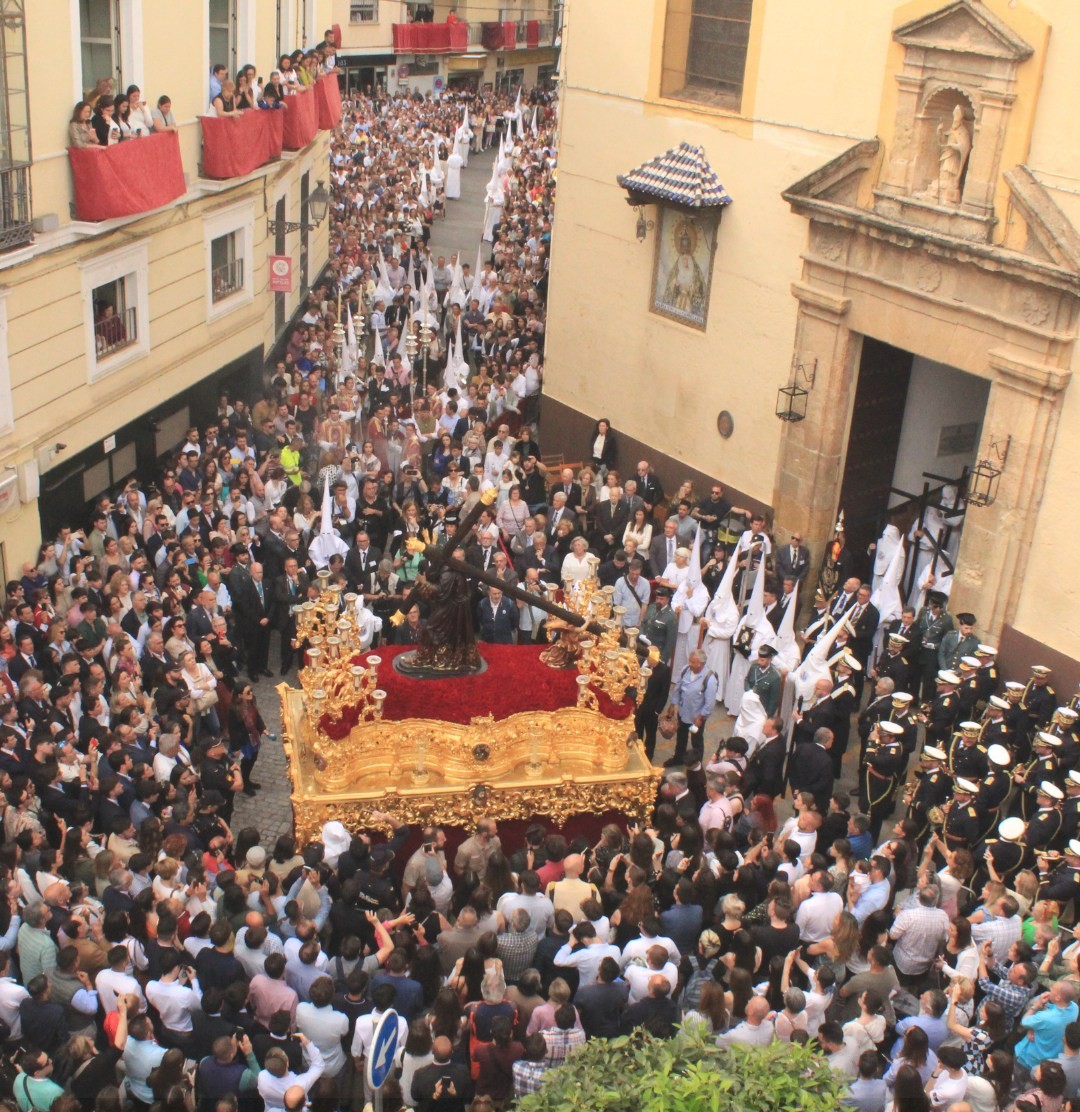
Here, illustrious figures such as Cervantes, Murillo, the Count of Orgaz, and the Counts of Ibarra have resided. On Holy Tuesday, the Virgin of Candelaria and our Father Jesus of Health processions take place. If you stay at Casa Palacio La Casa Blanca, you will be able to see the procession from your own apartment.
- CATHEDRAL OF SEVILLE. SAINT MARY OF THE SEAT AND OF THE ASUNCION (distance 600 meters)
Built on the site of the ancient mosque Al-Jama, with over 80 chapels and altars decorated with works by brilliant authors, 138 stained glass windows, and 9 access doors, the cathedral of Seville is the largest in dimensions within the Gothic world and the third in order of Christianity, after St. Peter’s in the Vatican and St. Paul’s in London. Declared a UNESCO World Heritage Site in 1987 and distinguished in 2010 as a property of exceptional universal value, in 1988 the Guinness World Records certified that it is the cathedral with the largest area in the world. Here lie the mortal remains of the discoverer Christopher Columbus and his son Hernando, as well as several kings of Castile, such as Peter I the Cruel, Ferdinand III the Saint, his son Alfonso X the Wise, along with their wives.
Of the 9 access doors to the enclosure, 7 lead directly to the interior, while the other two connect to the orange tree courtyard, an ancient Muslim ablution courtyard converted into the atrium for the Catholic cathedral. Each and every door of the cathedral has significant symbolism… take a moment to contemplate them… you might find details that completely escape the human eye. The preserved remains of the Muslim minaret, La Giralda, have become a symbol of the city. Do you dare to climb the 34 ramps that lead you to the bell chamber, where you can obtain a panoramic view of the entire city?


- SEVILLE ALCAZAR (distance 600 meters)
Located in a strategic place in the city, here stood the Roman port and merchant forum, and later a Visigothic basilica. It was the economic area with the greatest activity, thanks to the nearby Guadalquivir river; the ancient port of the city.
One of the most beautiful palaces belonging to the Spanish crown, the Royal Alcázar, is a combination of various palaces, patios, and gardens that make up this monumental complex where very diverse architectural styles merge, from the Islamic of its first inhabitants to the Mudejar and Gothic styles of the period following the city’s conquest by Castilian troops. In successive reforms, Renaissance and Baroque elements have been added, where each of the kings and emperors who lived here left their mark, having been and still being a residence for kings for more than ten centuries, where the passage of time and history have left their imprint, creating the richest tapestry of traditions and legend. It is the oldest royal palace in Europe, where Spanish kings, princes, and princesses have been born, lived (with loves, deaths, betrayals), and married at different stages of our history, in different dynasties, and with such utility it reaches our days. Its more than 110,000 m2 of gardens constitute a vegetative and monumental paradise in the heart of the city. Gardens that form a labyrinth inhabited by trees and plants, orange trees and palm trees brought to the Alcázar from various parts of the world, all surrounded by remnants of ancient buildings, fountains, and pavilions that invite rest.


NEIGHBORHOODS
- SANTA CRUZ NEIGHBORHOOD (distance 400 meters)
Santa Cruz is one of the most beautiful and popular neighborhoods in Seville, where strolling becomes a delight. A labyrinth of narrow streets and alleys like the old Jewish quarter, allowing you to escape the scorching summer sun of Seville and creating breezes that end in squares that seem far removed from the center of the city.
A Jewish neighborhood located in the heart of the city, that with its charm will transport you to distant times, past experiences that share their memories for you to feel as if you were witnessing that moment in situ. Experience the sensation of living in that era, where little streets, small squares, and buildings show you how the Jews lived, gathered, and cohabited… discover the essence of this neighborhood and soak up its magic.
Streets and squares with no exit… tiles, inscriptions, devilish grilles, and tombstones on every corner, mysterious crosses, and columns… dare you to delve into the mystery of Santa Cruz? Walk through the same places that historical and legendary figures roamed…
Relive past eras and experience firsthand the feelings of these characters…
Bar and restaurant recommendations
Tapas is a tradition that has been maintained and is growing in Seville throughout history, already being part of the local culture. The people of Seville enjoy a good tapa, and visitors spend part of their time in the city getting to know the bars and their tapas.